- Pea-rice blends match whey on amino acid completeness (PDCAAS 1.0) and perform comparably for muscle growth and recovery in trials.
- Whey contains lactose — around 65% of adults globally have reduced ability to digest it, leading to bloating, gas and discomfort that pea-rice avoids.
- Pea protein has shown a slight edge for satiety, particularly when paired with prebiotic fibre — useful for women managing weight without restriction.
- Sustainability favours pea protein heavily — far less land, water and emissions than dairy-based whey.
- Whey is best for strength athletes prioritising fastest post-workout absorption. For everyone else — most people — pea-rice with gut support is the smarter choice.
If you’ve been weighing up plant protein against whey, you’re not alone — it’s the single most common question new protein-powder shoppers ask. The honest answer isn’t “one is better than the other” full stop. Each has genuine strengths. But for women, for weight management, for digestion and for sustainability, pea protein has quietly become the smarter choice. Here’s the full side-by-side.
The 60-Second Summary
- Whey wins on: raw absorption speed, slightly higher amino acid score, and decades of sports-science research.
- Pea wins on: gut tolerance, no dairy, lower environmental footprint, satiety, and the ability to be paired with prebiotics and live cultures for genuine gut-health benefits.
- For muscle growth and recovery: head-to-head trials show comparable results when total protein intake is matched.
- For everyday wellness (not bodybuilding): pea protein with a built-in gut-health stack is usually the better choice — particularly for women.
Origin: Where They Come From
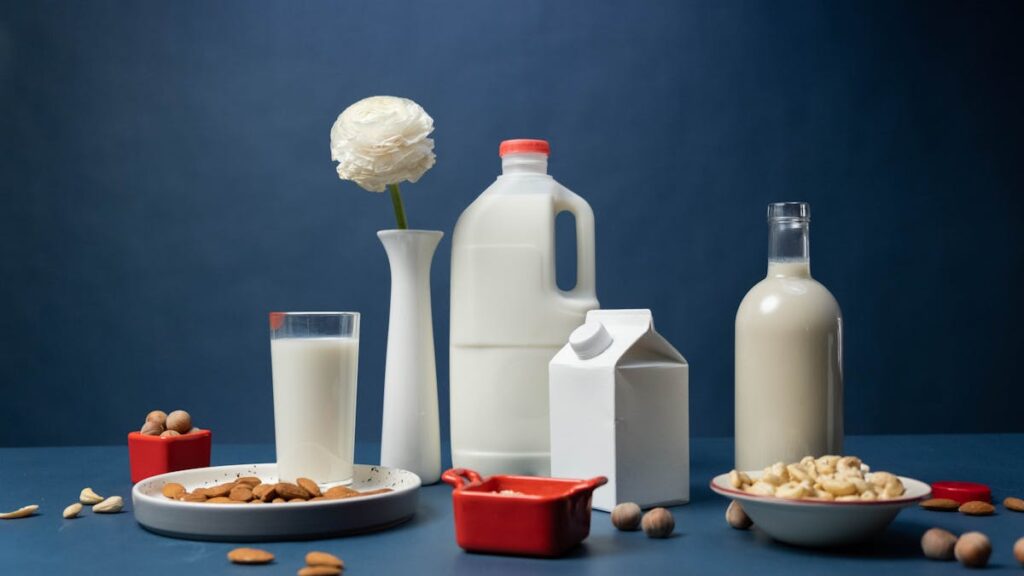
Whey is a by-product of cheese-making. When milk is processed into cheese, it separates into curds (solids) and whey (liquid). The whey is then filtered, dried, and turned into powder. It’s a dairy protein, so it contains lactose (in concentrate form) and is unsuitable for anyone with a dairy allergy or strict vegan diet.
Pea protein is made from yellow split peas. The peas are ground into flour, the protein isolated, and the result dried into a fine powder. Naturally dairy-free, soy-free, gluten-free and vegan.
Amino Acid Profile and Protein Quality
Both deliver all nine essential amino acids. The difference is in proportions.
- Whey isolate: PDCAAS 1.0 (max score). High in BCAAs, especially leucine — the amino acid most linked to muscle protein synthesis.
- Pea isolate: PDCAAS ~0.9. Naturally high in BCAAs and arginine; lower in methionine.
Pea protein’s slightly lower score doesn’t translate to slower real-world results. Studies comparing the two head-to-head for muscle growth show comparable outcomes when total protein intake is matched. For a deeper look at the amino acid picture, see our breakdown on is pea protein a complete protein.
Digestion and Gut Tolerance
This is where the differences become practical, not theoretical. A meaningful share of adults — particularly women — experience digestive discomfort with whey:
- Whey: Contains lactose. Around two thirds of the global adult population has reduced ability to digest lactose. Whey isolate has very low lactose; whey concentrate has more. Both can still trigger bloating, gas or stomach upset in sensitive individuals.
- Pea protein: Naturally dairy-free, so no lactose issue. Some people experience mild bloating from pea isolate alone in the first 1–2 weeks, especially when introduced quickly or in large doses. A pea protein formulated with added digestive enzymes and prebiotic fibre — like EP’s — tends to be much better tolerated.
The “I drink protein shakes but they bloat me” story usually traces back to whey. Switching to a quality pea protein resolves it for most people.
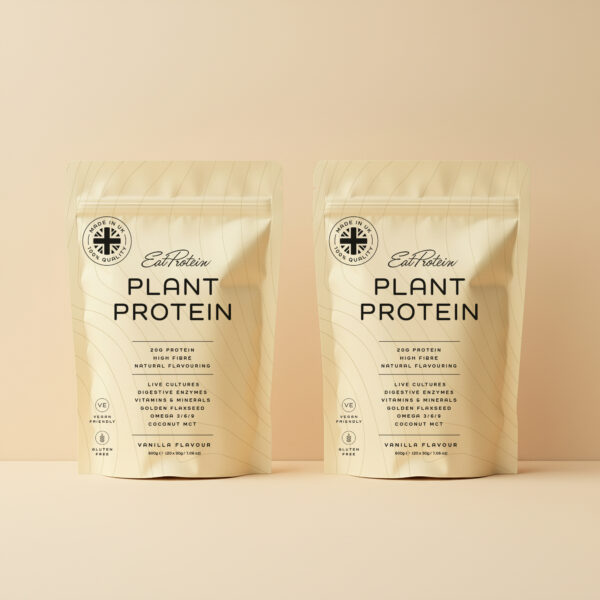
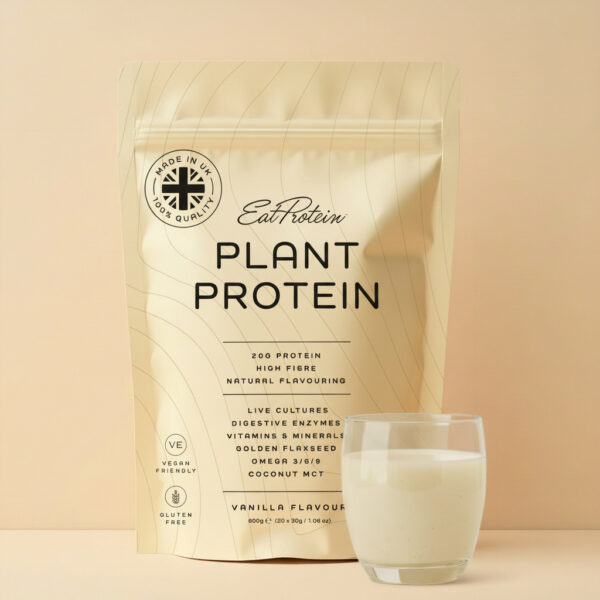
EatProtein Plant Based Wellness Protein is pea isolate with added digestive enzymes (amylase, lactase, lipase, protease, cellulase), live cultures (L. acidophilus and Bifidobacterium), and chicory root inulin — designed for women whose stomachs don’t get on with whey.
Weight Loss and Satiety
Both proteins suppress appetite — but pea protein has shown a slight edge in some satiety studies. This is partly because of its slower absorption, which keeps you fuller for longer, and partly because of the fibre often added to plant protein blends.
For weight management specifically:
- Whey: Fast-absorbing, which is excellent for post-workout but less ideal for sustained satiety. Slightly higher calories per scoop on average.
- Pea protein with added fibre: Slower-absorbing, more sustained satiety. The pea-protein-plus-prebiotic-fibre combination is one of the most underused tools for women aiming to manage weight without restriction. Add glucomannan or inulin in the formula and the effect compounds.
Research on pea protein has shown it can reduce subsequent meal intake by up to 12% — a meaningful effect when accumulated across a day.

Muscle Growth and Recovery
This is whey’s traditional stronghold — but the picture has shifted. Multiple head-to-head trials in the past decade have compared pea protein to whey for muscle growth and recovery, and the results consistently show no meaningful difference when total protein and leucine intake are matched.
- An 8-week trial published in Sports (2019) found pea protein delivered comparable muscle strength and thickness gains to whey when paired with high-intensity functional training.
- A 12-week trial published in Journal of the International Society of Sports Nutrition (2015) showed pea protein increased muscle thickness similarly to whey in resistance-trained men.
For most everyday users — and even most gym-goers — the protein source matters less than total daily protein intake. Hitting 1.2–1.6g of protein per kg of bodyweight from a varied mix is what drives results, not whether it comes from a cow or a pea.
Sustainability and Environmental Impact
This is where the gap is widest, and it’s not close:
- Whey is a dairy by-product. Dairy farming has a substantial carbon footprint, requires significant land and water, and contributes to methane emissions.
- Pea protein requires a fraction of the land, water and emissions to produce. Yellow peas are nitrogen-fixing legumes that improve soil rather than degrade it.
If sustainability factors into your choices at all, pea protein wins decisively here.
Allergens and Dietary Compatibility
- Whey: Contains dairy and lactose. Not suitable for vegans, lactose-intolerant, dairy-allergic, or anyone avoiding dairy for skin or digestive reasons.
- Pea protein: Dairy-free, lactose-free, soy-free, gluten-free, vegan. Suitable across most major dietary restrictions.
If you’ve ever found yourself reading ingredient labels carefully — for skin clarity, hormonal balance, gut comfort, or family dietary needs — pea protein is the simpler default.
Taste, Texture and Mixability
Whey’s traditional advantage was creamier texture and easier flavour blending. Modern pea proteins have largely closed that gap, though whey still mixes marginally smoother in water.
- Whey: Creamy, smooth, mixes easily in water or milk. Many sweetened versions contain artificial sweeteners.
- Pea isolate (poorly formulated): Can be earthy or chalky.
- Pea isolate (well formulated): Smooth, balanced, easy to blend into smoothies, porridge or just water. EP’s protein uses stevia (not artificial sweeteners) and natural flavours.
Cost
Whey is typically cheaper per gram of protein — economies of scale and a more mature market. A quality pea protein with added gut support tends to cost slightly more, but you’re paying for the digestive enzymes, prebiotics and live cultures bundled in. If you’d otherwise buy those separately, the cost evens out.
Which One Should You Choose?
Pea protein is usually the better choice if you:
- Experience bloating or digestive discomfort with dairy
- Are vegan, vegetarian, or reducing animal products
- Want extra gut support (prebiotics, live cultures, enzymes built in)
- Are managing weight and value satiety over speed of absorption
- Care about environmental impact
- Are a woman looking for protein formulated with female nutritional needs in mind
Whey may be the better choice if you:
- Are a strength-focused athlete training daily and want the fastest amino acid delivery post-workout
- Tolerate dairy well and don’t experience bloating
- Prioritise lowest cost per gram of protein above all
- Use protein primarily for performance, not everyday wellness
For everyone else — which is most people — a quality pea protein with built-in gut support wins on almost every meaningful axis.
The Bottom Line
Whey isn’t bad. It’s just no longer the obvious default. For women, for weight management, for digestion, for sustainability and for added gut-health benefits, pea protein is now the smarter choice. The “plant protein is inferior” idea is a decade out of date — pea protein scores close to whey on amino acid quality, performs comparably for muscle growth and recovery, and (when formulated with prebiotics, probiotics and enzymes) brings meaningful extras that whey doesn’t.
Ready to try a properly formulated plant protein? Explore EatProtein Plant Based Wellness Protein — pea isolate with digestive enzymes, live cultures and chicory root inulin. Or browse our full Vegan Protein range.
References
- Babault, N., Païzis, C., Deley, G., et al. (2015). Pea proteins oral supplementation promotes muscle thickness gains during resistance training. Journal of the International Society of Sports Nutrition, 12:3. View source
- Banaszek, A., Townsend, J.R., Bender, D., et al. (2019). The effects of whey vs. pea protein on physical adaptations following 8 weeks of high-intensity functional training. Sports, 7(1):12. View source
- Smith, C.E., Mollard, R.C., Luhovyy, B.L., & Anderson, G.H. (2012). The effect of yellow pea protein and fibre on short-term food intake, subjective appetite and glycaemic response in healthy young men. British Journal of Nutrition, 108(S1):S74-S80. View source
- Poore, J., & Nemecek, T. (2018). Reducing food’s environmental impacts through producers and consumers. Science, 360(6392):987–992. View source
- Phillips, S.M. (2017). Current concepts and unresolved questions in dietary protein requirements and supplements in adults. Frontiers in Nutrition, 4:13. View source
- Storhaug, C.L., Fosse, S.K., & Fadnes, L.T. (2017). Country, regional, and global estimates for lactose malabsorption in adults. The Lancet Gastroenterology & Hepatology, 2(10):738–746. View source