- Collagen is a genuine protein, but it's an incomplete one — it contains no tryptophan at all, one of the nine essential amino acids your body can't make on its own.
- Because of that missing tryptophan, hydrolysed collagen scores 0 on the DIAAS scale, the method nutrition scientists use to rank protein quality — the same score as a protein source that provides none of an essential amino acid.
- Roughly one in three amino acids in collagen is glycine, with proline and hydroxyproline making up much of the rest — a profile built for connective tissue, not general nutrition.
- Fortifying collagen with added tryptophan to make it a complete protein isn't new — research on the approach dates back to at least 2008 — but it remains uncommon across the collagen category.
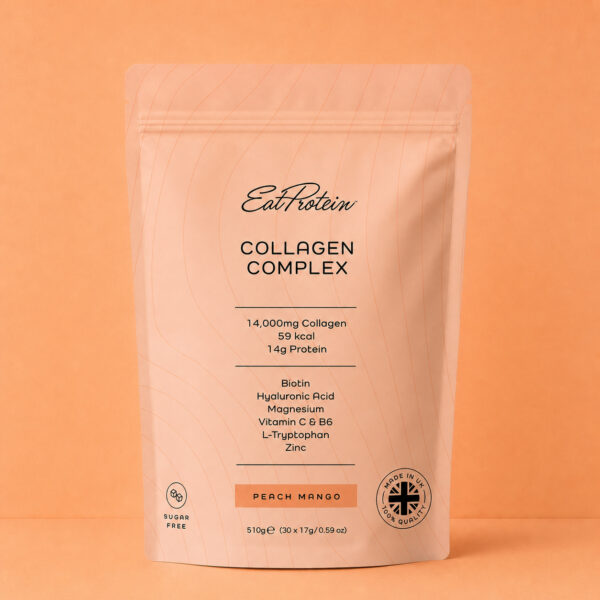
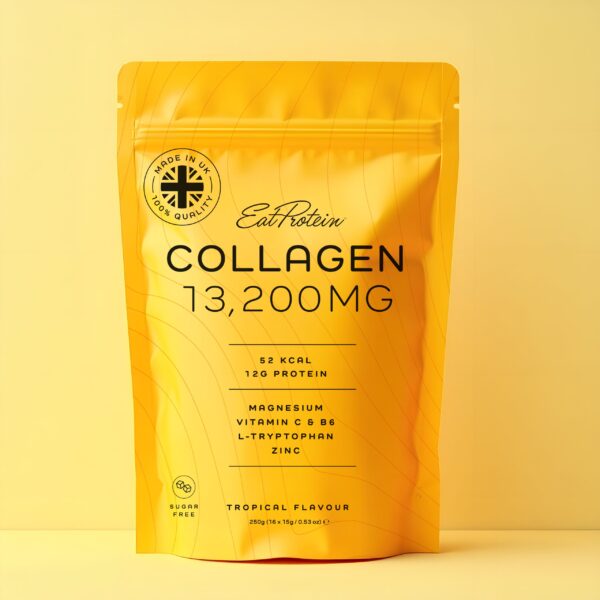
- EP's Collagen Complex adds L-tryptophan, giving its 12g of protein per serving all nine essential amino acids — an uncommon (not unique) point of difference, verifiable on the ingredients list.
Collagen is everywhere on protein labels now, sitting right alongside whey and soy as if it’s interchangeable with either. It isn’t. Collagen is a genuine protein — but it’s an unusual one, and the way it’s unusual matters if you’re counting it toward your daily protein target.
Here’s the science, in plain terms: what “complete protein” actually means, why collagen doesn’t automatically qualify, how its amino acid makeup differs from a protein like whey or soy, and what that means practically if you’re relying on a collagen shake to help hit your daily protein target.
Is Collagen a Protein?
Yes. Collagen is in fact the most abundant protein in your body, making up roughly a third of your total protein mass — it’s the main structural component of skin, tendons, ligaments, cartilage and bone. Like every protein, it’s built from chains of amino acids. The question isn’t whether collagen is a protein. It’s whether it’s a complete one, and that’s a different thing entirely.
What Makes a Protein “Complete”?
A complete protein is one that contains all nine essential amino acids (EAAs) — the ones your body can’t make on its own and has to get from food. Miss even one, and the protein is classed as incomplete, no matter how much of it you eat.
Nutrition scientists score this formally using the Digestible Indispensable Amino Acid Score (DIAAS), which replaced the older PDCAAS method as the preferred way to rank protein quality. DIAAS looks at how much of each essential amino acid a food actually delivers, relative to what your body needs, after accounting for digestibility. A score of 1.0 or above means the protein meets your EAA requirements on its own; anything below that means it’s short somewhere.
Animal proteins like whey, casein, eggs and meat generally score well because they contain a broad, balanced spread of all nine EAAs. Soy is the standout plant-based example — it’s one of the few plant proteins that qualifies as complete on its own, because it happens to contain workable amounts of all nine, tryptophan included. Collagen, as you’ll see below, is a different story entirely.
Why Collagen Isn’t a Complete Protein
Collagen contains no tryptophan at all — none, in any collagen from any animal source. That’s not a processing quirk or a quality issue with a particular product; it’s baked into collagen’s structure. Every collagen molecule is built from the same repeating three-amino-acid sequence, and tryptophan simply doesn’t appear in it.
Because tryptophan is one of the nine essential amino acids, its total absence means hydrolysed collagen scores 0 on the DIAAS scale — the same result you’d get from a protein source with none of an essential amino acid at all. That’s why nutrition guidance is consistent on this point: collagen shouldn’t be counted as a straight swap for a complete protein source in your daily intake.
Why Does Tryptophan Specifically Matter?
Tryptophan does more than fill a gap on an amino acid chart. Your body uses it to build new protein throughout your muscles and organs, and it’s also the precursor your body converts into serotonin and, further downstream, melatonin — the chemicals involved in mood regulation and sleep. You can’t make any of it yourself, so every gram has to come from your diet, in food or supplement form.
That’s what makes its total absence from collagen more than a technicality. Every other essential amino acid missing at low levels would still show up somewhere in the score. Zero tryptophan means collagen can’t contribute anything at all toward that particular requirement, no matter how large the serving.
What Are Collagen Peptides Actually Made Of, and How Does That Differ From Whey or Soy?
Collagen’s amino acid profile is genuinely unusual compared to most dietary protein. Roughly one in three of its amino acids is glycine, with proline and hydroxyproline making up much of the rest — hydroxyproline barely features in any other protein in your body. Collagen’s structure is built from a repeating three-amino-acid sequence, with glycine occupying every third position along the chain and proline or hydroxyproline typically filling the positions either side of it. That composition is exactly what makes collagen useful for connective tissue: glycine’s small size lets the collagen triple helix pack tightly together, and hydroxyproline helps stabilise that structure. The powder in your shaker has already had that structure broken down into short, fast-absorbing chains through hydrolysis — our guide to what hydrolysed collagen actually is covers that process in more depth, including why it doesn’t change the underlying amino acid profile.
Whey and soy look completely different on paper. Both spread their amino acids across a much broader mix, including meaningful amounts of the branched-chain amino acids (leucine, isoleucine, valine) that drive muscle repair, plus the sulphur-containing amino acids collagen is also low in. Whey in particular is unusually rich in leucine, which is one reason it’s the reference protein most researchers compare others against for muscle-building purposes. Collagen simply isn’t built the same way — its amino acids are weighted toward structural strength, not the broad nutritional spread a general-purpose protein needs.
None of this makes collagen’s profile a flaw. It’s specialised, in the same way a protein optimised for connective tissue repair should be. The issue only arises when a specialised protein gets marketed and used as if it were a general-purpose one.
Is Collagen Powder Good for You?
Yes, within what it’s actually good at. The evidence base for collagen supplementation and skin hydration, elasticity and the appearance of wrinkles is genuinely solid — a 2021 systematic review and meta-analysis of 19 randomised controlled trials found consistent benefits across those measures. None of that depends on collagen being a complete protein; it depends on giving your body extra glycine, proline and hydroxyproline to work with, which is exactly what an incomplete-but-specialised protein still does well. It’s worth taking on those merits alone, whichever format suits you from EatProtein’s full collagen range.
Where collagen powder isn’t good for you is as a replacement for your main protein source. Research directly comparing the two found that whey protein — rich in tryptophan and the other essential amino acids collagen lacks — stimulated significantly more muscle protein synthesis than an equivalent dose of collagen peptides, with or without resistance exercise. If your goal is muscle maintenance or growth, collagen on its own isn’t built for that job.
Should Collagen Count Toward Your Daily Protein Target?
Partially, but not as your main source. Collagen still supplies amino acids your body uses and still contributes grams toward a protein target on a food label. What it can’t do is substitute for a complete protein like whey, soy, meat, fish, eggs or dairy, because your body needs tryptophan (and the other eight essential amino acids) from somewhere in your overall diet, and collagen alone won’t provide it. If you’re not sure how much protein you actually need day to day before you start factoring collagen in, our guide to daily protein needs is a useful starting point.
Here’s where it actually matters in practice:
- If you eat a varied diet with meat, fish, eggs, dairy or a mix of plant proteins alongside your collagen, this is a non-issue — you’re getting your tryptophan and other EAAs from those foods, and collagen is simply topping up your total protein and giving you extra glycine, proline and hydroxyproline on top.
- If a collagen shake is replacing a protein meal — say, standing in for breakfast rather than sitting alongside it — the incomplete profile is worth knowing about. Fifteen grams of an incomplete protein doesn’t do the same job as fifteen grams of a complete one, even though the label shows the same number.
- If you’re tracking amino acids specifically (as opposed to just grams of protein) for training or recovery goals, treat ordinary collagen as a separate category from your main protein sources rather than folding it into the same total.
Can a Collagen Product Ever Be a Complete Protein?
Yes — if tryptophan is added back in. This isn’t a new idea: research on tryptophan-fortified hydrolysed collagen for nutritional support goes back to at least 2008, when it was studied as a way to give collagen-based nutrition products a full amino acid profile. Fortifying collagen with the one amino acid it’s missing is a straightforward fix, even though it isn’t standard practice across the category.
EP’s Collagen Complex takes this approach: it adds L-tryptophan to its 14,000mg of hydrolysed bovine collagen, which is what allows its 12g of protein per serving to count as a genuine complete protein containing all nine essential amino acids. It’s an uncommon formulation choice in the collagen market, not a unique one — but it’s a real, verifiable difference in what you’re getting, not a marketing spin on an incomplete protein. If this distinction matters to you when comparing collagen products, checking the ingredients list for added tryptophan (rather than taking a “complete protein” claim at face value) is the reliable way to verify it.
The Bottom Line
Collagen is a real protein with real, well-evidenced benefits for skin, joints and connective tissue. It is not, on its own, a complete protein — the total absence of tryptophan sees to that, regardless of brand or price point. That’s not a criticism of collagen so much as a reminder of what it’s actually for: it was never going to be a like-for-like replacement for whey, soy or the other complete proteins in your diet, and it doesn’t need to be, to still be worth taking.
Enjoy it for what it does well, don’t lean on it as your only protein source, and check the label — not the marketing copy — if a complete amino acid profile actually matters for how you’re using it.
References
- Wolfe, R. R., Rutherfurd, S. M., Kim, I. Y., & Moughan, P. J. (2016). Protein quality as determined by the Digestible Indispensable Amino Acid Score: evaluation of factors underlying the calculation. Nutrition Reviews. View source
- Paul, C., Leser, S., & Oesser, S. (2019). Significant Amounts of Functional Collagen Peptides Can Be Incorporated in the Diet While Maintaining Indispensable Amino Acid Balance. Nutrients. View source
- Gauza-Włodarczyk, M., Kubisz, L., & Włodarczyk, D. (2017). Amino acid composition in determination of collagen origin and assessment of physical factors effects. International Journal of Biological Macromolecules. View source
- Friedman, M. (2018). Analysis, Nutrition, and Health Benefits of Tryptophan. International Journal of Tryptophan Research. View source
- de Miranda, R. B., Weimer, P., & Rossi, R. C. (2021). Effects of hydrolyzed collagen supplementation on skin aging: a systematic review and meta-analysis. International Journal of Dermatology. View source
- Oikawa, S. Y., Kamal, M. J., Webb, E. K., McGlory, C., Baker, S. K., & Phillips, S. M. (2020). Whey protein but not collagen peptides stimulate acute and longer-term muscle protein synthesis with and without resistance exercise in healthy older women: a randomized controlled trial. American Journal of Clinical Nutrition. View source
- Stuart, P. S., Bell, S. J., & Molnar, J. (2008). Use of Tryptophan-Fortified Hydrolyzed Collagen for Nutritional Support. Journal of Dietary Supplements. View source