- Most collagen studies that show real results use daily doses of roughly 2.5g-10g of hydrolysed collagen, taken consistently, for at least 8-24 weeks before assessing the outcome — sporadic or short-term use won't reproduce those results.
- In one trial, 114 women taking 2.5g of collagen peptides daily for 8 weeks saw a 20% reduction in eye wrinkle volume compared with placebo — but skipping days undermines that kind of steady effect.
- Vitamin C is a required cofactor for collagen synthesis, so a diet short of it limits what your body can do with a collagen supplement — EP's Collagen Complex includes vitamin C, biotin, B6, zinc and magnesium for this reason.
- Combining bovine and marine collagen, or collagen and biotin, isn't harmful — but combining collagen with a prescription medication is a question for a pharmacist, not a blog post.
- Widely repeated warnings about hot drinks, caffeine or eating protein "cancelling out" collagen aren't backed by evidence — the mistakes that actually matter are dose, consistency and giving it enough time.
Collagen supplements work when they’re taken properly — the dosing and the timeframe are just narrower than most marketing suggests. Most of the disappointing results people report don’t come from the supplement failing; they come from how it was taken. Here’s a practical rundown of the mistakes that genuinely undermine your results, the interaction questions worth taking to a pharmacist rather than a blog post, and the “avoid this” claims that don’t actually hold up.
What should you avoid when taking collagen?
The biggest mistakes are taking too little, taking it inconsistently, and stopping before the evidence-based timeframe has passed — not some hidden list of foods or drinks to steer clear of. Genuine interaction questions, like combining collagen with a prescription medication, are real but belong to a pharmacist conversation, not a general rule. The sections below cover each of these in turn, including what actually happens when you combine collagen with vitamin C, biotin or another collagen type, and which “things to avoid” claims are just noise.
Taking a dose too low to make a difference
Most of the research showing measurable results uses daily doses of roughly 2.5g to 10g of hydrolysed collagen, taken as one measured serving rather than scattered through the day. A study of 114 women taking 2.5g of collagen peptides daily for 8 weeks saw a 20% reduction in eye wrinkle volume compared with placebo, alongside a 65% increase in procollagen I in the skin (Proksch et al., 2014). A separate 24-week trial in athletes used 10g daily to reduce activity-related joint pain (Clark et al., 2008), and a 12-month study in postmenopausal women used 5g daily to improve bone mineral density (König et al., 2018).
If the product you’re taking supplies meaningfully less collagen per serving than that, per-serving dosage matters more than brand loyalty — see how much collagen you should be taking each day for the full breakdown by goal.
Stopping before you’ve given it enough time to work
How long you need to stick with it depends on what you’re taking it for, and it’s longer than most people expect. Skin changes in the trials above started to show at 8 weeks and were still measurable at 12 weeks, joint pain improvements were assessed over 24 weeks, and the bone density study ran a full 12 months. One trial found that skin improvements were largely retained four weeks after participants stopped taking the supplement (Bolke et al., 2019) — which is a good sign for durability, but it still took the full course to get there in the first place. Judging collagen as “not working” after two or three weeks isn’t judging it against the timeframe it was actually tested on.
Being inconsistent instead of taking it daily
Every trial referenced above used daily intake, not an occasional serving when you remember. Skipping days repeatedly lowers your average dose below the level that was actually tested, even if the label dose is correct on the days you do take it — three servings a week isn’t a smaller version of the same result, it’s a different, untested pattern. The simplest fix is attaching it to an existing daily habit — first thing with breakfast, or alongside your morning drink — so it doesn’t depend on remembering, and keeping the tub somewhere you’ll actually see it rather than at the back of a cupboard.
Buying on the front-of-pack number, not the actual serving
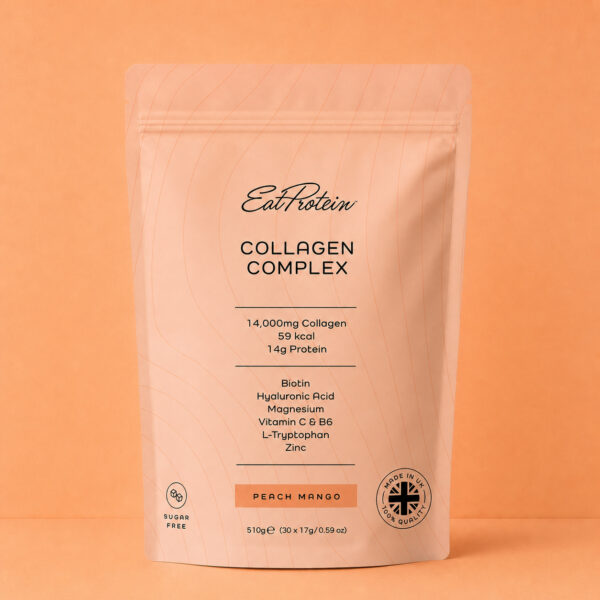
Some products headline a “collagen” figure that reflects the weight of the whole blend — collagen plus flavourings, sweeteners and other ingredients — rather than the amount of hydrolysed collagen itself. Others advertise a serving size in grams without stating how much of that is actually collagen peptides, which makes it hard to compare products or to know whether you’re anywhere near the doses used in research. Before buying, check the nutrition or ingredients panel for a specific milligram figure for hydrolysed collagen, not a vague reference to a “collagen blend” or “complex.” EP’s Collagen Complex, for example, lists 14,000mg of hydrolysed bovine collagen type I & III per scoop on the pack — that’s the kind of specific number worth looking for, rather than one you have to take on trust.
What to take collagen with — and why vitamin C matters
Vitamin C isn’t optional here: it’s a required cofactor for the enzymes your body uses to build collagen, so a diet that’s short of it limits what you get out of a collagen supplement (Pullar, Carr & Vissers, 2017). A systematic review of vitamin C and collagen synthesis after musculoskeletal injury found consistent preclinical evidence that vitamin C supports collagen formation, though it noted that direct clinical evidence in humans is still limited and more research is needed (DePhillipo et al., 2018) — worth knowing so you don’t overstate what’s proven. It’s a factual reason some collagen products are formulated with added vitamin C rather than collagen alone; EP’s Collagen Complex, for instance, includes vitamin C alongside biotin, B6, zinc and magnesium in the same scoop.
Can you take bovine and marine collagen together?
Yes — there’s no evidence this causes any harm. Once collagen is hydrolysed, your digestive system breaks it down into the same small peptides and amino acids regardless of the animal source it came from — if you’re unsure what actually separates the two, our comparison of bovine and marine collagen covers the practical differences. That said, there’s also no research showing a benefit to combining sources over taking one product at a properly tested dose, so it’s simpler and better value to pick one and take it consistently rather than splitting your budget across two half-doses.
Can you take biotin and collagen together?
Yes — many collagen products are formulated with biotin already included, and there’s no known negative interaction between the two at supplement doses. The one practical caution is unrelated to collagen itself: high-dose biotin supplements are known to interfere with certain blood test results, including some thyroid and cardiac tests, by skewing the lab assay rather than your actual levels. If you take a biotin-containing supplement and have bloodwork booked, mention it to your GP or the person taking the sample beforehand.
Can you take collagen if you’re on blood pressure medication or other prescriptions?
There’s no established interaction between collagen peptides themselves and common blood pressure medications, but this isn’t a question to settle from a blog post — take it to a pharmacist. Multi-ingredient collagen formulas often include added minerals or electrolytes alongside the collagen, and a pharmacist can check the full ingredients list, not just the collagen, against your specific prescription and any other conditions you have. Take the pack or the ingredients label with you rather than describing it from memory.
Myths you can stop worrying about
Several widely repeated “avoid this” claims about collagen don’t hold up to scrutiny. They’re worth debunking directly, because believing them tends to make people more anxious about a supplement that’s genuinely low-risk.
Hot drinks “destroying” the collagen
This one doesn’t stand up. Hydrolysed collagen is already broken down into short peptides before it ever reaches your cup — that’s what “hydrolysed” means. The structural change people are picturing (the triple-helix protein unwinding under heat) is what happens to intact, unhydrolysed collagen or gelatine, not to peptides that have already been broken apart during manufacturing. There’s no research showing that stirring hydrolysed collagen into a hot drink stops it from working.
Taking it alongside other protein
There’s no good evidence that eating protein at the same time meaningfully blocks collagen’s effects. All dietary protein is broken down into the same pool of amino acids and peptides during digestion, so combining collagen with a meal isn’t the problem some claims suggest — if anything, taking it with food may just be easier to remember. Some of your day’s collagen intake comes from collagen-rich foods like bone broth, skin-on chicken and fish anyway, so there’s nothing to gain from spacing your supplement out from a meal that happens to include them.
Caffeine cancelling it out
There’s no clinical evidence that coffee or tea interferes with collagen supplementation. This claim doesn’t have a plausible mechanism behind it and hasn’t been tested directly — it’s one worth dropping rather than working around.
Put together, the things that actually move the needle are unglamorous: a properly dosed, clearly labelled product, taken daily, for as long as the research suggests it takes to see the outcome you’re after — with enough vitamin C in your diet to let your body use it. Everything else on the “what to avoid” list is either a pharmacist conversation or a myth not worth the anxiety.
References
- Proksch E, Schunck M, Zague V, Segger D, Degwert J, Oesser S (2014). Oral intake of specific bioactive collagen peptides reduces skin wrinkles and increases dermal matrix synthesis. Skin Pharmacology and Physiology. View source
- Pullar JM, Carr AC, Vissers MCM (2017). The Roles of Vitamin C in Skin Health. Nutrients. View source
- DePhillipo NN, Aman ZS, Kennedy MI, Begley JP, Moatshe G, LaPrade RF (2018). Efficacy of Vitamin C Supplementation on Collagen Synthesis and Oxidative Stress After Musculoskeletal Injuries: A Systematic Review. Orthopaedic Journal of Sports Medicine. View source
- Clark KL, Sebastianelli W, Flechsenhar KR, Aukermann DF, Meza F, Millard RL, Deitch JR, Sherbondy PS, Albert A (2008). 24-Week study on the use of collagen hydrolysate as a dietary supplement in athletes with activity-related joint pain. Current Medical Research and Opinion. View source
- Bolke L, Schlippe G, Gerß J, Voss W (2019). A Collagen Supplement Improves Skin Hydration, Elasticity, Roughness, and Density: Results of a Randomized, Placebo-Controlled, Blind Study. Nutrients. View source
- König D, Oesser S, Scharla S, Zdzieblik D, Gollhofer A (2018). Specific Collagen Peptides Improve Bone Mineral Density and Bone Markers in Postmenopausal Women—A Randomized Controlled Study. Nutrients. View source