- Collagen benefits scale with dose — measurable results start around 2,500mg a day, but the strongest evidence for skin, hair, nails and joints sits between 10,000mg and 15,000mg daily.
- A 500mg tablet needs to be taken 20 times a day to match a single 10,000mg powder serving — which is why format, not willpower, is usually the real reason tablet-only routines under-dose.
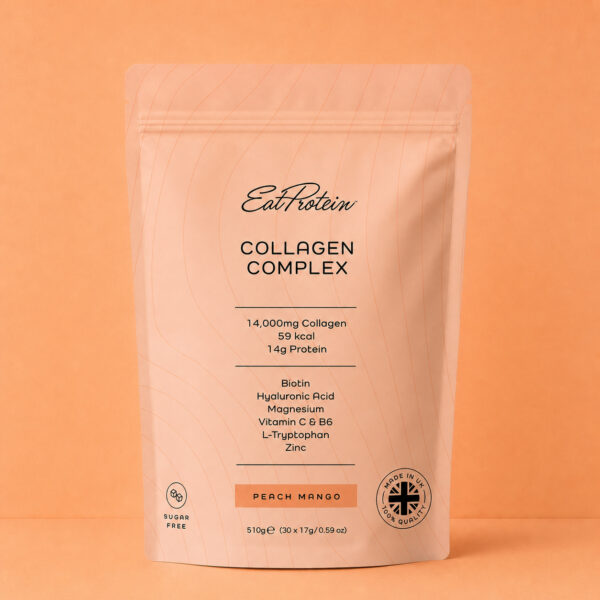
- EatProtein's Collagen Complex delivers 14,000mg of hydrolysed collagen per scoop — towards the top of the range research has actually tested, in one drink rather than a handful of tablets.
- There's no single "best" time to take collagen — morning, evening, with or without food all work equally well. Daily consistency matters far more than timing.
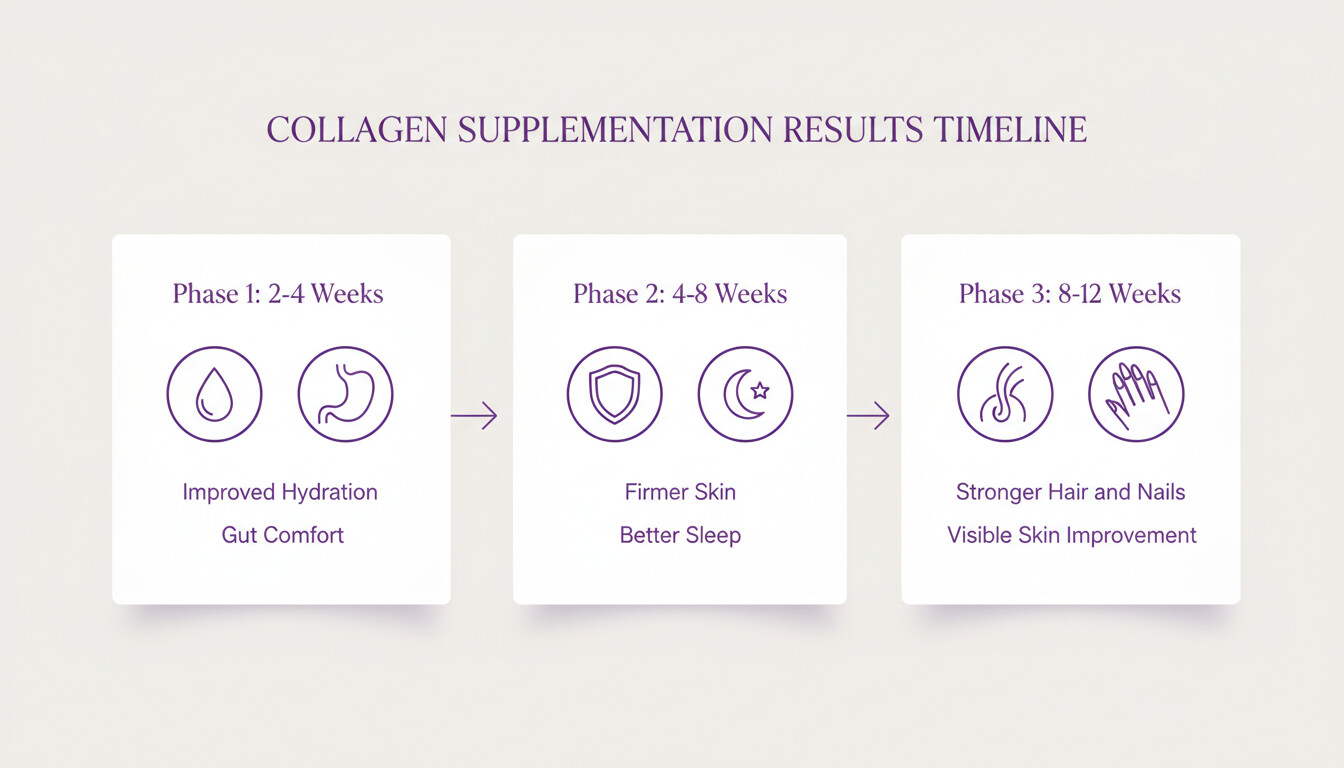
- Most people notice early changes (hydration, nails) within 2–4 weeks, with fuller results — firmer skin, thicker hair, better joint comfort — building over 8–12 weeks of daily use.
Most healthy adults see measurable benefits somewhere between 2,500mg and 15,000mg of collagen a day, and the evidence linking dose to results gets genuinely strong from around 10,000mg upward. Below is exactly how each dose level compares — and what you get for every extra milligram.
That’s easier said than sorted, though, because every product on the shelf uses a different number. Tablets say 500mg. Sachets say 5,000mg. Powders say 10,000mg or more. None of them are lying to you — they’re just delivering completely different doses, and the format you choose affects your results more than almost anything else you’ll decide.
Here’s how the evidence stacks up, dose by dose, including where the products already in your kitchen cupboard probably sit.
Collagen Dosage at a Glance: 1,000mg to 14,000mg Compared
Use this table to see what a given daily dose is actually likely to do, and what it takes to reach it in real products.
| Daily dose | What the evidence supports | Typical product format | Equivalent in 500mg tablets |
|---|---|---|---|
| 1,000mg | Below the range used in most positive trials. Usually a top-up dose inside a multi-ingredient formula rather than a standalone one. | Tablets or capsules | 2 tablets |
| 2,500mg | The entry point with real evidence behind it — a 12-week randomised trial at this dose found significant improvements in skin hydration, elasticity, roughness and density. | Tablets, or a small daily sachet | 5 tablets |
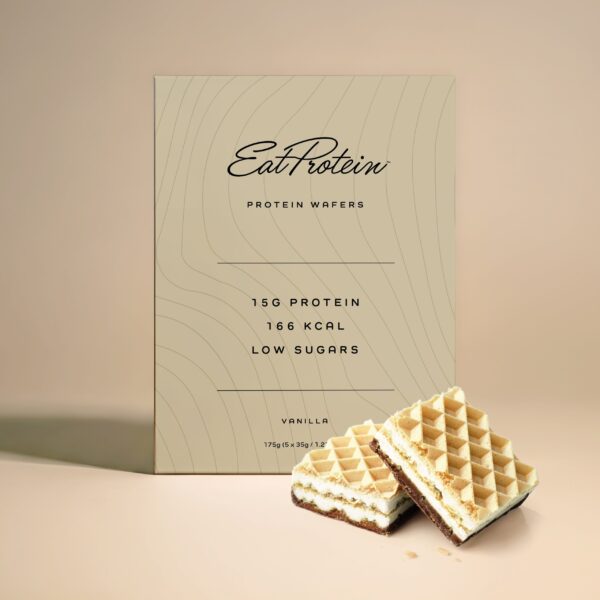
| 5,000mg | A reasonable middle ground, linked to improvements in skin elasticity, fine lines and nail strength over 8–12 weeks. | Powder sachet or a stack of protein wafers | 10 tablets |
| 10,000mg | The threshold most consistently tied to visible change — skin firmness, hydration, hair thickness, nail growth and joint flexibility, often within 4–8 weeks. | A single scoop of a powder drink | 20 tablets |
| 14,000mg | Towards the top of the typical commercial range, matching doses used in the studies with the strongest reported effects. No adverse effects have been reported at doses up to 15,000mg. | One scoop of EP’s Collagen Complex | 28 tablets |
Is 1,000mg of Collagen Enough?
On its own, 1,000mg sits below the doses used in most trials that report visible results. It isn’t risky, and it’s better than nothing, but if skin, joint or hair changes are the goal, most people need considerably more.
You’ll see 1,000mg most often in basic gummies or single tablets, where it’s usually one ingredient among several rather than the main event. That’s not necessarily a problem — but if a product’s headline claim rests on collagen and the label says 1,000mg or less, treat the marketing with a bit of scepticism. The dose is the part doing the work, not the packaging.
Is 10,000mg of Collagen a Day Too Much?
No — 10,000mg sits inside the range with the strongest evidence behind it, not above it. It’s roughly two-thirds of the way to the highest doses tested in published trials, and no study at this level has reported safety concerns.
Where people start to overthink it is confusing “high dose” with “too much.” Collagen is a protein, and your body processes it the way it processes any dietary protein — there’s no cliff edge at 10,000mg where things start going wrong. If anything, this is the dose range where most of the research on skin, hair, nails and joints actually sits.
What Does 14,000mg of Collagen Actually Give You?
14,000mg is towards the top of what’s commercially available, and it matches the doses used in studies reporting the clearest results for skin firmness, hydration, hair thickness and joint comfort. It’s not a “more is automatically better” number — it’s simply within the range the research has actually tested.
EatProtein’s Collagen Complex delivers 14,000mg of hydrolysed bovine collagen (types I and III) per scoop, alongside biotin, hyaluronic acid, vitamin C, B6, zinc and magnesium. It also provides 12g of complete protein, covering all nine essential amino acids thanks to added L-tryptophan, for 59 calories per serving, and it’s sugar-free and made in the UK. One scoop is designed to get you to that upper-range dose without needing to also plan a separate protein or vitamin routine around it.
How Much Collagen Per Day for a Woman?
For most women, 10,000mg or above daily gives the broadest support across skin, hair, nails and joints — but the right number still depends on what you’re prioritising.
- Skin and hair — if radiant skin, stronger nails and healthier hair are the main goals, aim for 10,000mg or above. Type I collagen makes up around 80% of your skin, so a higher dose gives your body more raw material to work with.
- Joint comfort — for women who are active, run, or simply want their joints to feel supple, research supports 5,000–10,000mg daily.
- Perimenopause and beyond — collagen production drops more steeply as oestrogen shifts during this stage. A higher daily dose, in the 10,000–15,000mg range, can help offset that decline. Our perimenopause supplements guide covers what else is worth considering alongside it.
- Gut health — Type III collagen supports the gut lining. If digestive comfort matters to you, a bovine collagen with both Types I and III gives broader support than marine collagen, which only supplies Type I.
You don’t need a different supplement for each of these. One daily serving at an effective dose covers skin, joints and gut support at the same time.
Tablets vs Powder: Why Dose Format Matters
Format is one of the most overlooked factors in choosing a collagen supplement — and as the table above shows, it’s the difference between a dose that’s realistic to hit daily and one that isn’t. For a closer look at how the two formats stack up beyond dose alone, see our tablets vs powder comparison.
- Tablets and capsules typically contain 500–3,000mg per serving. Reaching 10,000mg would mean swallowing anywhere from 4 to 20 tablets a day — not practical for most people, however good their intentions.
- Powders and drinks can deliver 10,000–14,000mg in a single scoop or sachet. One serving, one drink, done.
If you’re serious about hitting an effective daily dose, a powder-based collagen makes it far easier — and a drink you actually enjoy is a much more sustainable daily habit than a handful of tablets.
Best Time to Take Collagen
There is no magic hour. The most important thing is taking it every day — consistency beats timing, every time.
That said, here are some practical starting points based on what we know about absorption.
Morning, on an empty stomach
This is the most popular choice, and there’s a logic to it. Taking collagen first thing, before breakfast, means less competition for absorption in your digestive system. Mix it with cold water, drink it down, and you’ve ticked off your wellness routine before the day has properly started.
Before bed
Your body does much of its repair work while you sleep. Some women prefer taking collagen in the evening to support that natural recovery window. If mornings are chaotic, an evening routine works just as well.
Before or after exercise
If joint support and recovery are the priority, taking collagen around a workout can make sense. Some research suggests that collagen taken 30–60 minutes before exercise, alongside vitamin C, may support collagen synthesis in tendons and ligaments.
A collagen supplement that already includes Vitamin C, Vitamin B6, Zinc and Magnesium — like EatProtein’s — means you don’t need to add anything extra to support absorption.
The bottom line on timing
Pick a time that fits your life and stick with it. Morning tends to work well for most people simply because it’s easy to anchor to an existing habit — kettle on, collagen in, day started.
Should You Take Collagen With Food or Without?
It genuinely doesn’t matter much. Hydrolysed collagen peptides are already broken down into small fragments that your body absorbs efficiently, with or without food.
If you have a sensitive stomach, taking it alongside a light breakfast can help. Otherwise, an empty stomach is perfectly fine, and may support marginally faster absorption.
How Long Before You See Results?
Collagen isn’t an overnight transformation — it’s a gradual, cumulative process. Your body uses the peptides to build and repair from the inside out, and that takes time.
Here’s a realistic timeline of what to expect:
- 2–4 weeks — skin may start to feel more hydrated, and nails may feel less brittle. Early signs that it’s working.
- 4–8 weeks — this is where most women start to see visible change: firmer skin, a healthier glow, stronger nails, and less joint stiffness.
- 8–12 weeks — the fuller picture emerges. Hair feels thicker, skin looks plumper, joints feel more comfortable during activity.
The key word is daily. Skipping days slows the process. Think of it like watering a plant — a little every day does far more than a lot once a week.
Can You Take Too Much Collagen?
There’s no established upper limit, and studies using doses up to 15,000mg daily have reported no adverse effects. Collagen is a protein, and your body handles it the same way it handles any protein from food.
That said, more isn’t automatically better. Once you’re in the 10,000–15,000mg range — where 14,000mg sits — you’re already giving your body plenty to work with. Going significantly higher than that is unlikely to speed things up. It’s the consistency of a good daily dose that delivers results, not occasional mega-doses.
What Helps Collagen Work Better?
Collagen doesn’t work in isolation. A few nutrients play a supporting role in helping your body actually use those peptides:
- Vitamin C — essential for collagen synthesis. Without it, your body can’t properly form new collagen fibres. A good supplement will include it.
- Zinc — supports skin repair and immune function, both of which tie into how effectively your body uses collagen.
- Vitamin B6 — supports amino acid metabolism, helping your body make the most of the protein and amino acids in your collagen.
- Magnesium — involved in over 300 processes in the body, including protein synthesis and energy production.
- Hydration — collagen needs water to do its job in your skin. Drinking plenty of water alongside your collagen supports that plumper, hydrated look.
It’s worth checking for these on the label — a collagen supplement that already includes them saves you piecing together a separate vitamin stack.
Making It Part of Your Routine
The best collagen routine is the one you actually stick with. Here’s a simple approach that works for most women:
- Choose a format that gets you to an effective dose — for most people that means a powder, since it’s the only realistic way to hit 10,000mg or more in one serving.
- Anchor it to a habit you already have — first thing with your morning water, alongside your coffee, or as part of a post-workout routine.
- Give it at least 8 weeks before assessing results. A day-one photo gives you something honest to compare against.
- Don’t overthink timing — morning, evening, with food, without. It all works. Just take it daily.
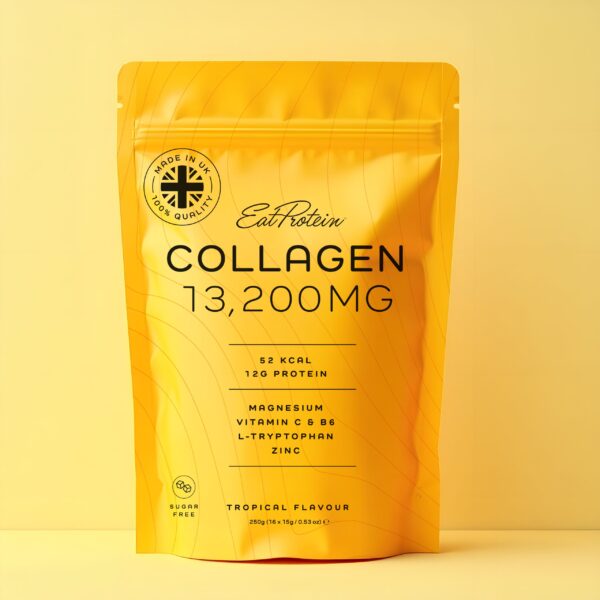
Whatever format you choose — tablets, wafers or a powder drink — the number on the label matters more than the marketing around it. Our collagen range spans the doses covered above, from 6,000mg protein wafers to the 13,200mg Rejuvenating Collagen Tropical Juice and 14,000mg Collagen Complex — so you can match the dose to what you’re actually trying to achieve.
References
- Proksch, E., Segger, D., Degwert, J., Schunck, M., Zague, V., & Oesser, S. (2014). Oral supplementation of specific collagen peptides has beneficial effects on human skin physiology: a double-blind, placebo-controlled study. Skin Pharmacology and Physiology. View source
- Choi, F. D., Sung, C. T., Juhasz, M. L. W., & Mesinkovska, N. A. (2019). Oral Collagen Supplementation: A Systematic Review of Dermatological Applications. Journal of Drugs in Dermatology. View source
- de Miranda, R. B., Weimer, P., & Rossi, R. C. (2021). Effects of hydrolyzed collagen supplementation on skin aging: a systematic review and meta-analysis. International Journal of Dermatology. View source
- Paul, C., Leser, S., & Oesser, S. (2019). Significant Amounts of Functional Collagen Peptides Can Be Incorporated in the Diet While Maintaining Indispensable Amino Acid Balance. Nutrients. View source
- Martínez-Puig, D., Costa-Larrión, E., Rubio-Rodríguez, N., & Gálvez-Martín, P. (2023). Collagen supplementation for joint health: the link between composition and scientific knowledge. Nutrients. View source
- Shaw, G., Lee-Barthel, A., Ross, M. L., Wang, B., & Baar, K. (2017). Vitamin C-enriched gelatin supplementation before intermittent activity augments collagen synthesis. American Journal of Clinical Nutrition. View source
- Reilly, D. M., & Lozano, J. (2021). Skin collagen through the lifestages: importance for skin health and beauty. Plastic and Aesthetic Research. View source
- Bolke, L., Schlippe, G., Gerß, J., & Voss, W. (2019). A Collagen Supplement Improves Skin Hydration, Elasticity, Roughness, and Density: Results of a Randomized, Placebo-Controlled, Blind Study. Nutrients. View source