- A standard tablet's headline milligram figure is almost always a multi-tablet dose, not a per-tablet one — Holland & Barrett's "Bovine Collagen 3000mg" is 3,000mg across three tablets, or 1,000mg each.
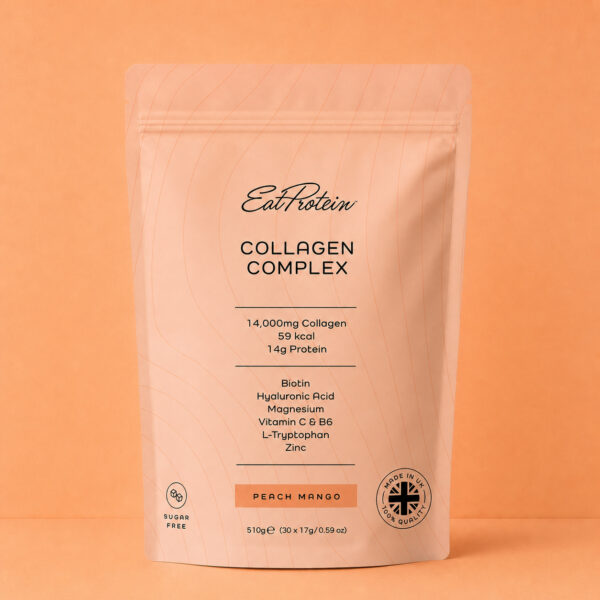
- You'd need 14 standard 1,000mg tablets to match a single 14,000mg scoop of a collagen powder like EP's Collagen Complex.
- New Nordic Collagen Filler delivers just 200mg of collagen on its 2-tablet maintenance dose — around 1/25th of a typical 10,000mg liquid sachet — with the rest of the tablet made up of pomegranate, algae, tomato and wheat ceramide extract.
- Some products sold in the collagen category contain no collagen at all — Vitabiotics Perfectil Skin lists 0mg collagen, relying instead on vitamin C's role in the body's own collagen formation.
- Absorption depends on whether the collagen has been hydrolysed into smaller peptides, not on whether it comes as a tablet, capsule, liquid or powder — format changes cost and convenience, not the underlying biology.
Most people taking collagen tablets are getting a fraction of the dose they think they are. The clinical trials behind collagen’s skin and joint benefits typically use daily doses from around 2,500mg up to 15,000mg of hydrolysed collagen. A standard tablet pack states its headline milligram figure for two, three or four tablets combined — not for one. Powder and liquid formats make it easier to hit those doses in a single serving, because the product isn’t padded out with a tablet binder. Here’s the arithmetic, the honest case for tablets anyway, and how to choose either format well.
How many collagen tablets do you need to reach 10,000mg?
A single scoop of a 14,000mg collagen powder gets you to a full clinical dose in one go. A tablet doesn’t.
Take Holland & Barrett’s Bovine Collagen 3000mg tablets as an example. The “3000mg” on the front of the pack is the three-tablet dose, not the per-tablet one — so each tablet actually contains 1,000mg. To match a single 14,000mg scoop of a powder like EP’s Collagen Complex, you’d need 14 of those tablets, taken across the day.
The table below shows the same arithmetic for a handful of verified UK collagen tablets and capsules, scaled to a 10,000mg target — a dose common across liquid sachets and powders, and within the range covered in our guide to how much collagen you should take per day.
| Product | mg per tablet/capsule (derived from label) | Number needed to reach 10,000mg |
|---|---|---|
| Holland & Barrett Marine Collagen with Vitamin C | 1,000mg | 10 tablets |
| Holland & Barrett Bovine Collagen 3000mg | 1,000mg | 10 tablets |
| Nature’s Best Collagen Beauty Tablets | 833mg | 12 tablets |
| Prowise Healthcare Marine Collagen 1200mg | 600mg | 17 capsules |
| New Nordic Collagen Filler (maintenance dose) | 100mg | 100 tablets |
New Nordic Collagen Filler isn’t marketed as a 10,000mg product — it’s included to show the size of the gap between a “collagen” branded tablet and a full liquid or powder dose. Its own maintenance dose is 200mg across two tablets a day, dropping from a 400mg, four-tablet loading dose in the first eight weeks.
Not every tablet is trying to hit a skin dose, though. Vitabiotics’ Jointace Collagen delivers 300mg of Type II collagen a day, aimed at joint cartilage rather than skin — a genuinely different product class from the doses above, not a weaker version of them. Comparing it on the same milligram scale as a skin-dose product would be misleading.
Tablets vs capsules vs liquid sachets vs powder: which wins on dose?
Format changes cost and convenience far more than it changes the biology. The table below compares one verified UK product from each format at, or scaled to, a 10,000mg dose.
| Format | Typical dose per unit | Units needed for 10,000mg | Cost for 10,000mg | Convenience | Absorption |
|---|---|---|---|---|---|
| Tablets e.g. H&B Bovine Collagen 3000mg |
1,000mg per tablet | 10 tablets | ~£2.29 (derived — not the labelled 3-tablet dose) | No taste, easy to carry, but a lot to swallow at this dose | Hydrolysed — same principle as any format |
| Capsules e.g. Prowise Marine Collagen 1200mg |
600mg per capsule | 17 capsules | ~£3.33 (derived) | No taste, easy to carry, the most units of any format at this dose | Hydrolysed, stated on label |
| Liquid sachets e.g. Kollo Premium Liquid Marine Collagen 10,000mg |
10,000mg per sachet | 1 sachet | £2.40 | Pre-measured, no mixing required, ready to drink | Hydrolysed Type I peptides, stated on label |
| Powder e.g. Correxiko Marine Collagen Peptides Powder |
10,000mg per 10g scoop | 1 scoop | £1.33 | Needs mixing into a drink, but flexible dosing | Double hydrolysed Type I & III, stated on label |
Prices checked 21 September 2026 and may vary — confirm current pricing before buying. The tablet and capsule costs are derived by scaling a verified per-unit price up to 10,000mg; neither product’s label recommends taking that many at once.
Absorption depends on whether the collagen has been hydrolysed into smaller peptides your gut can take up efficiently — not on whether it arrives as a tablet, capsule, liquid or powder. All four products above state hydrolysed collagen on the label. The real difference between formats is dose per unit and cost, not biology.
Why does a tablet say 3,000mg when there’s only 1,000mg in front of you?
UK collagen tablets almost always print a headline milligram figure for the full daily dose, not for a single tablet. It’s usually stated correctly in the small print — but a reader glancing at “3000mg” on the front of a pack can easily assume that’s per tablet.
Holland & Barrett’s Bovine Collagen 3000mg tablets contain 3,000mg across three tablets — 1,000mg each. Prowise’s Marine Collagen 1200mg capsules contain 1,200mg across two capsules — 600mg each. New Nordic’s “Collagen Filler” is the most extreme example: the name suggests a substantial dose, but it delivers 400mg of collagen at a four-tablet loading dose, dropping to 200mg on the two-tablet maintenance dose — with most of the tablet’s weight made up of pomegranate, algae, tomato extract and wheat ceramides, not collagen.
Some products in the collagen aisle contain no collagen at all. Vitabiotics’ Perfectil Skin, merchandised alongside collagen supplements, lists zero collagen in its ingredient panel. It’s a vitamin C formula — vitamin C genuinely supports the body’s own collagen formation, but that’s a different claim from containing collagen. If you want collagen, check the ingredients panel for a milligram figure next to the word “collagen,” not just the product name or the shelf it’s sitting on.
When do collagen tablets actually make sense?
Tablets and capsules solve real problems powder doesn’t. If you travel a lot, dislike the taste or texture of dissolved collagen, or simply don’t want to measure out a scoop every morning, a tablet you can swallow with water in five seconds is a genuine advantage — one that matters more than a few extra tablets for plenty of people.
The trade-off is convenience per dose, not effectiveness. As long as you’re taking a hydrolysed collagen at a level in the range used in clinical studies — and you’re prepared to take enough tablets to get there — format is a matter of preference, not a different tier of science.
What are the best collagen tablets, if you want to stick with them?
If tablets suit your routine better than powder, these are worth knowing about. EP doesn’t sell any of them — this is an honest look at the tablet market, not a comparison built to make our own powder win.
Nature’s Best Collagen Beauty Tablets
2,500mg of hydrolysed VERISOL® bioactive collagen peptides (Type I and III, bovine source) across three tablets a day — 833mg per tablet — plus vitamin C, biotin and silica per tablet. A 60-tablet pack covers 20 days at around £1.04 a day.
Holland & Barrett Bovine Collagen 3000mg
3,000mg of hydrolysed bovine collagen across three tablets (1,000mg each), with added vitamin C and L-ornithine hydrochloride. A 90-tablet pack covers 30 days at around £0.69 a day — one of the cheapest ways to reach a meaningful collagen dose in tablet form.
Prowise Healthcare Marine Collagen 1200mg
1,200mg of hydrolysed marine collagen (Naticol®) across two capsules a day, with no added actives beyond the capsule shell. A 60-capsule pack covers 30 days at around £0.40 a day — the cheapest option here per day, though you’d need a lot of capsules to reach a 10,000mg-equivalent dose.
What are the best collagen powders?
Powders and liquid sachets make it easier to reach a full clinical dose in one serving, without swallowing a handful of tablets — see EP’s full collagen range for options beyond the flagship Collagen Complex.
EP Collagen Complex Peach Mango
14,000mg of hydrolysed bovine collagen (Type I & III) per scoop, with added biotin, hyaluronic acid, vitamin C, B6, zinc and magnesium, plus 12g of complete protein from all nine essential amino acids. Sugar-free, 59 calories, made in the UK.
Correxiko Marine Collagen Peptides Powder
10,000mg of double-hydrolysed Type I & III marine collagen per 10g scoop, wild-caught from Canadian and Arctic waters, with no added ingredients. A 300g pack covers 30 days at around £1.33 a day.
Planet Paleo Pure Collagen Powder
7,500mg of grass-fed bovine collagen hydrolysate (Types 1 and 3) per serving, with no fillers or additives. A 225g pack covers 30 days at around £0.77 a day.
If you’d rather not mix a drink at all, EP’s Collagen Protein Wafers deliver 6,000mg of collagen and 15g of protein per pack (166 calories) — a snack-format middle ground between tablets and a mixed powder.
What is the best way to take collagen, and when?
There’s no single dosing time that clinical trials have shown to outperform others — the research behind collagen’s skin and joint benefits typically specifies a daily dose sustained over 8 to 12 weeks, not a particular time of day. Taking it consistently, at a time that’s easy to stick with, matters more than whether that’s morning or night.
Two things do affect how well a collagen supplement works. First, it needs to be hydrolysed — broken down into smaller peptides — for your gut to absorb it efficiently, whatever format it comes in. Second, vitamin C is a required cofactor for your body’s own collagen synthesis, which is why most collagen supplements, tablets, powders and liquids alike, add it in. Taking collagen alongside a source of vitamin C, whether that’s built into the product or from your diet, supports the process rather than just supplying raw material.
If you’re taking a tablet-based product, spread the dose across the day as the label suggests rather than taking them all at once. It won’t change absorption, but it’s easier to swallow four tablets with breakfast and four with dinner than eight in one go.
References
- Proksch E, Segger D, Degwert J, et al. (2014). Oral supplementation of specific collagen peptides has beneficial effects on human skin physiology: a double-blind, placebo-controlled study. Skin Pharmacology and Physiology. View source
- Asserin J, Lati E, Shioya T, Prawitt J. (2015). The effect of oral collagen peptide supplementation on skin moisture and the dermal collagen network: evidence from an ex vivo model and randomized, placebo-controlled clinical trials. Journal of Cosmetic Dermatology. View source
- Bolke L, Schlippe G, Gerß J, Voss W. (2019). A Collagen Supplement Improves Skin Hydration, Elasticity, Roughness, and Density: Results of a Randomized, Placebo-Controlled, Blind Study. Nutrients. View source
- León-López A, Morales-Peñaloza A, Martínez-Juárez VM, et al. (2019). Hydrolyzed Collagen—Sources and Applications. Molecules. View source
- Pullar JM, Carr AC, Vissers MCM. (2017). The Roles of Vitamin C in Skin Health. Nutrients. View source
- de Miranda RB, Weimer P, Rossi RC. (2021). Effects of hydrolyzed collagen supplementation on skin aging: a systematic review and meta-analysis. International Journal of Dermatology. View source
- NHS. Vitamins and minerals — Vitamin C. View source