- Most collagen side effects are mild, digestive and dose-related — bloating and a feeling of fullness are the most commonly reported, and they typically ease within 1-2 weeks as your body adjusts.
- For healthy adults, a typical collagen serving (around 10,000-15,000mg) doesn't harm kidney or liver function — research comparing higher- and lower-protein diets found no meaningful difference in kidney function between healthy adults.
- Claims that collagen causes acne or headaches are anecdotal, not evidence-based — no controlled trial has established either as a genuine side effect.
- If you have existing kidney disease, a diagnosed liver condition, or take regular medication, check with a GP or pharmacist before starting collagen — that's the one group where individual medical advice genuinely matters here.
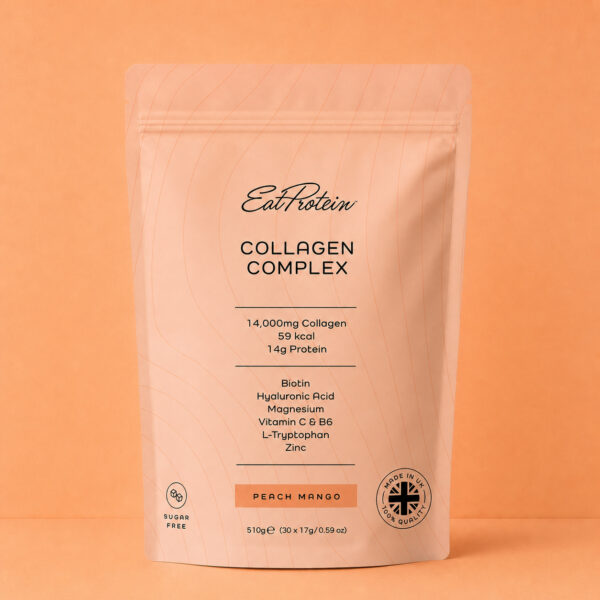
- Added sugar, sweeteners and fillers in some collagen products cause more digestive complaints than the collagen itself — EatProtein's Collagen Complex is sugar-free at 59 calories per scoop.
If you’re about to start taking collagen, it’s sensible to want to know what to expect first. Collagen supplements have a good overall safety record, and most people take them daily with no problems at all. Where side effects do turn up, they’re almost always mild, digestive, and linked to how much you’re taking — the kind of thing that settles down within a week or two, not something that signals harm.
It’s also a supplement people search a lot of specific questions about — bloating, constipation, headaches, kidneys, liver — often because it’s easier to find a worried forum post than a straight answer. This guide goes through what the evidence actually supports, where the evidence is thin or purely anecdotal, and where a genuine caution flag exists — including the two questions people search for most: whether collagen affects your kidneys, and whether it affects your liver.
What Are the Most Common Side Effects of Collagen?
The most commonly reported side effects of collagen are mild and digestive — a feeling of fullness, light bloating, or an unsettled stomach, usually in the first few days of taking it. Collagen is a concentrated protein, and adding a large dose of any protein to your routine all at once can take your gut a little time to adjust to, particularly if you’re not used to protein supplements generally. Most UK collagen products use hydrolysed collagen, meaning the protein is already broken down into smaller peptides before you take it, which generally makes it easier to digest than whole collagen sources.
In rough order of how often they’re reported:
- Common, mild: bloating, a feeling of fullness, mild digestive upset — usually in the first one to two weeks.
- Less common: constipation, loose stools, an unusual or lingering aftertaste.
- Uncommon, and largely anecdotal: headaches, skin breakouts.
- Rare: allergic reaction — see the section below on when to stop and seek help.
Research reviewing the dermatological collagen trials has consistently found that reported adverse effects are infrequent and mild, with nothing suggesting collagen carries a meaningful safety risk for healthy adults taking a normal daily dose. Separate research on how collagen peptides fit into the diet has found they can be included at meaningful daily amounts without disrupting your overall amino acid balance — in plain terms, your body handles a collagen serving the same way it handles any other source of dietary protein.
Can Collagen Cause Bloating?
Yes — mild bloating is one of the more commonly reported effects, especially in the first week of taking a new collagen supplement. It’s usually down to the sudden increase in protein intake rather than anything specific to collagen itself; your digestive system simply needs a short adjustment period.
If bloating bothers you, try starting with half your usual scoop for the first few days, take it with food rather than on an empty stomach, and make sure you’re drinking enough water alongside it. For most people, this settles on its own well within two weeks.
Can Collagen Cause Constipation?
It’s possible but not common, and it isn’t a widely reported effect in the research. When it does happen, it’s more often linked to not drinking enough water alongside a higher protein intake, rather than collagen having a direct constipating effect.
The simplest fix is the obvious one: increase your water intake, keep your fibre intake steady from food, and give it a couple of weeks before deciding whether it’s genuinely the collagen causing it.
Can Collagen Cause Diarrhoea?
Occasionally, yes, though this tends to be about what’s added to a collagen product rather than the collagen itself. Some flavoured powders use sugar alcohols (sorbitol, maltitol and similar) as sweeteners, and these are well known for causing loose stools and digestive discomfort in some people, independent of the collagen.
If you get this reaction, check the ingredients list before assuming collagen is the cause — a different sweetener or an unflavoured product may solve it entirely.
Can Collagen Cause Acne or Skin Breakouts?
There’s no clinical trial evidence linking collagen supplementation to acne or breakouts — this is an anecdotal claim you’ll see online, not something backed by controlled research. A 2022 review of the marketing and media claims made about oral collagen found that consumer claims routinely outpace what the scientific literature actually supports, and skin breakouts are a good example of that gap.
That doesn’t mean individual reactions can’t happen — some people are more sensitive to any new supplement or ingredient, including flavourings or add-ins in a specific product. If you notice new breakouts after starting collagen, it’s reasonable to pay attention and try a plain or different product. Just be honest with yourself that the current evidence doesn’t show collagen itself is the cause.
Can Collagen Cause Headaches?
As with acne, this is anecdotal rather than evidence-based — there’s no controlled research showing collagen supplements cause headaches. Where people report them, it’s often difficult to separate from other factors: dehydration, caffeine elsewhere in the diet, or simple coincidence with starting a new routine.
If headaches are frequent, severe, or come with other symptoms, that’s worth raising with a GP or pharmacist regardless of whether collagen is involved — not something to self-diagnose from a supplement label.
Bovine vs Marine Collagen: Are the Side Effects Different?
The general side effect profile — mild, occasional, digestive — is similar whichever source you choose, since both are broken down into peptides before they reach you. Where the source does matter is allergy risk. Marine collagen is derived from fish, so it isn’t suitable if you have a fish or shellfish allergy, both of which are among the most common UK food allergies. Bovine collagen, from cattle, carries a much rarer risk of reaction in people with a specific beef or red meat allergy.
The two sources also differ slightly in collagen type — bovine collagen typically supplies Type I and Type III, marine typically supplies Type I only — but that’s a question of what the collagen is used for in the body, not a side effect consideration. If you know your allergy status, that’s the deciding factor here, not any meaningful difference in day-to-day tolerability between the two. For the fuller picture of how the two sources compare beyond tolerance, our bovine vs marine collagen comparison goes through type, absorption and use in more depth.
Does Collagen Affect Your Kidneys or Liver?
For healthy adults, there’s no evidence that a typical collagen dose harms your kidneys or your liver. This is one of the most-searched collagen questions, and the concern usually traces back to a broader — and largely outdated — worry that high protein intake strains healthy kidneys.
A systematic review and meta-analysis comparing healthy adults on higher- versus lower-protein diets found no meaningful difference in kidney function between the groups. Higher protein intake does cause a temporary rise in how hard the kidneys filter, but in healthy kidneys this is a normal, reversible adaptation — not a sign of damage. It’s the same physiological response you’d get from any diet with a bit more protein in it, collagen included, and it isn’t evidence of the kidneys being overworked or harmed. The liver, similarly, processes dietary protein as a routine part of digestion; there’s nothing about collagen specifically that places unusual strain on a healthy liver.
A typical collagen serving (in the region of 10-15g) is a modest addition to overall daily protein intake for most adults — it’s not comparable to the very high, sustained protein intakes used in some bodybuilding contexts, which is usually where the kidney-strain worry originally comes from. The people who genuinely should check with a doctor first are those with existing kidney disease, where protein intake often needs individual management as part of ongoing care, and anyone with a diagnosed liver condition or who is on regular medication, particularly medicines that affect kidney or liver function. If that’s you, a quick conversation with your GP or pharmacist before starting is the right move — this is exactly the kind of individual check a blog post can’t make for you.
Why Do Some Collagen Products Cause More Side Effects Than Others?
A lot of what gets blamed on “collagen” actually comes from what else is in the tub. Added sugar, artificial sweeteners, and fillers are common causes of digestive complaints — bloating, wind, loose stools — and they’re unrelated to the collagen peptides themselves. If one collagen product upsets your stomach and another doesn’t, the collagen is often not the variable that changed; the flavouring system, sweetener, or thickener usually is.
It’s worth checking the label for what’s actually in your serving, not just the collagen dose on the front of the pack. EatProtein’s Collagen Complex, for example, is sugar-free at 59 calories per scoop — one less variable to rule in or out if you’re trying to work out what’s causing a reaction.
Does Collagen Cause Weight Gain?
No — a normal collagen serving is low in calories, and there’s no evidence that collagen peptides themselves cause weight gain. Where weight does become a factor, it’s usually down to what’s added to a product — sugar, syrups or high-calorie flavourings — rather than the collagen. Taken on its own, collagen simply adds a small, low-calorie protein source to your day. For a closer look at how it fits into a weight management plan, see our guide to collagen and weight management.
Do Collagen Side Effects Go Away?
In most cases, yes. Digestive effects in particular tend to ease within one to two weeks as your body adjusts, especially if you start with a smaller dose and build up rather than jumping straight to a full serving. If a side effect hasn’t settled after a couple of weeks, or it’s getting worse rather than better, that’s worth paying attention to rather than pushing through.
When Should You Stop Taking Collagen or See a Doctor?
Stop taking collagen and seek medical attention straight away if you notice signs of an allergic reaction — swelling of the face, lips or throat, widespread hives, or difficulty breathing. This is rare, but it’s the one scenario that needs urgent care rather than a wait-and-see approach.
Beyond that, see a GP or pharmacist if a side effect is severe, doesn’t improve after a couple of weeks, or genuinely worries you — and speak to one before you start if you have an existing health condition, particularly kidney or liver disease, or take regular medication. Collagen is a supplement, not a treatment: it’s meant to sit alongside a normal, varied diet, not replace medical advice specific to you.
The overall picture is a reassuring one. For most healthy adults, collagen is well tolerated, the side effects that do occur are mild and usually settle quickly, and the more alarming-sounding questions — kidneys, liver — don’t hold up against the evidence for people without an existing condition. Start with a normal dose, give your body a couple of weeks to adjust, and check with a GP or pharmacist first if you fall into one of the groups above.
References
- Choi, F. D., Sung, C. T., Juhasz, M. L., & Mesinkovska, N. A. (2019). Oral Collagen Supplementation: A Systematic Review of Dermatological Applications. Journal of Drugs in Dermatology. View source
- de Miranda, R. B., Weimer, P., & Rossi, R. C. (2021). Effects of hydrolyzed collagen supplementation on skin aging: a systematic review and meta-analysis. International Journal of Dermatology. View source
- Rustad, A. M., Nickles, M. A., McKenney, J. E., Bilimoria, S. N., & Lio, P. A. (2022). Myths and media in oral collagen supplementation for the skin, nails, and hair: A review. Journal of Cosmetic Dermatology. View source
- Devries, M. C., Sithamparapillai, A., Brimble, K. S., Banfield, L., Morton, R. W., & Phillips, S. M. (2018). Changes in Kidney Function Do Not Differ between Healthy Adults Consuming Higher- Compared with Lower- or Normal-Protein Diets: A Systematic Review and Meta-Analysis. The Journal of Nutrition. View source
- Paul, C., Leser, S., & Oesser, S. (2019). Significant Amounts of Functional Collagen Peptides Can Be Incorporated in the Diet While Maintaining Indispensable Amino Acid Balance. Nutrients. View source
- NHS (2026). Food allergy. NHS. View source
- NHS (2023). Chronic kidney disease. NHS. View source